Most websites do not struggle because they lack content. They struggle because the content, service pages, and conversion paths were never organized into a system. Teams publish blogs, launch landing pages, add new services, and invest in ads, yet the site still feels harder to navigate than it should. Rankings plateau. Leads come in inconsistently. High intent visitors leave without taking the next step.
That is usually a website architecture problem.
Website architecture shapes how pages relate to one another, how users move through the site, and how search engines interpret what matters most. Google explains that search engines discover and understand pages through crawling and links, while its SEO guidance also stresses building sites that are easy for users to explore. Competitor guidance from Semrush and HubSpot reinforces the same point: structure helps users navigate, helps search engines understand relationships between pages, and supports stronger SEO performance.
For growth focused brands, website architecture sits at the intersection of visibility and revenue. It influences whether your most important pages receive authority, whether supporting content builds topical depth, and whether a visitor can move from discovery to decision without friction. When architecture is planned well, site structure SEO and conversion architecture stop feeling like separate disciplines. They start working as one system.
What Is Website Architecture and Why It Matters
Defining Website Architecture in a Modern SEO Context
Website architecture is the hierarchical organization of your pages, categories, supporting content, and internal links. It determines how a user moves from your home page to a service page, from a blog post to a proof point, and from a topic overview to a deeper resource. HubSpot describes website architecture as the hierarchical structure of website pages, reflected through internal linking, while Semrush defines it as the way a site’s pages are organized so users and search engines can navigate them effectively.
In practice, that means architecture is much bigger than navigation menus. It includes your URL structure, your topic clusters, your breadcrumbs, your internal links, your templates, and the paths that lead a visitor toward an inquiry, demo request, or purchase. Google’s documentation makes clear that links help it find pages to crawl and understand their relevance, which means the way pages connect is not incidental. It is foundational.
A strong architecture creates context. It tells a search engine that your service pages sit at the center of a topic, that your supporting articles reinforce those services, and that your site is organized intentionally rather than assembled over time without a plan. That context makes your content easier to discover, easier to understand, and easier to trust.
The Connection Between Architecture, Rankings, and Revenue
Architecture influences rankings because it affects crawlability, internal authority flow, and topical relationships. It influences revenue because it affects clarity, confidence, and the ease of taking action. HubSpot notes that a sound website structure helps users find information quickly and supports conversions, while Search Engine Land frames architecture as a direct driver of crawlability, user experience, and rankings.
That connection matters because most companies do not need more pages for the sake of more pages. They need stronger pathways between the pages they already have. A well built architecture helps your most valuable content reinforce your money pages. It helps visitors understand where to go next. It reduces the likelihood that great content sits buried, disconnected, or competing with other pages on the same site.
Why Most Websites Fail at Structure
Most architecture problems start with growth. A company launches with a few core pages. Then come new services, blog categories, campaigns, resources, case studies, and location pages. Over time, the site becomes a patchwork of decisions made by different teams at different moments. Nothing is obviously broken, but the overall system no longer makes sense.
Another common issue is organizational separation. SEO teams focus on rankings. Designers focus on appearance. CRO teams focus on buttons, forms, and landing page performance. Development teams focus on implementation. Without one architecture strategy sitting above those disciplines, each improvement happens in isolation.
The result is familiar. Service pages lack supporting content. Blog posts rank but do not drive qualified action. High authority pages fail to pass value to conversion pages. Visitors arrive with intent and hit dead ends. The site technically exists, but it does not guide anyone with confidence.
The Core Principles of High Performing Website Architecture
Hierarchy and Logical Page Relationships
Every strong website architecture starts with hierarchy. Your highest value topics should sit closest to the top of the site, with supporting pages branching underneath them in a way that feels predictable. That does not mean every website should look identical. It means the structure should be logical enough that both people and search engines can tell which pages are foundational and which pages are supporting.
For a service business, that often looks like a home page connected to primary service pillars, then to subservice pages, industry pages, supporting educational content, and conversion pages. For a content driven site, it may look like a home page connected to category hubs, then to pillar pages, then to deeper cluster content. The exact shape can vary. The principle does not. Important pages need a clear place in the system.
Internal Linking as a Ranking System
Internal links are not filler. They are one of the clearest ways to express relationships across a site. Google states that it uses links to find new pages to crawl and as a signal when determining page relevance, and it recommends using crawlable links with anchor text that helps people and Google make sense of the destination.
That has practical consequences. When a site links randomly, it scatters meaning. When it links strategically, it creates a pattern of reinforcement. Your most authoritative articles can support service pages. Your service pages can connect to case studies. Your case studies can connect to contact pages. Your category hubs can point to the content that deserves more visibility.
A smart internal linking system also helps you control emphasis. If one service matters more to revenue, the architecture should reflect that. If one topic cluster matters more to search growth, the internal link pattern should support that priority.
Topical Clusters and Content Silos
HubSpot’s topic cluster model remains one of the clearest ways to think about content architecture at scale. Its guidance recommends choosing broad topics, creating more specific supporting pages around those topics, and linking them together so the site builds broader authority around the subject. It also explains that pillar pages cover the core topic, while cluster content addresses specific subtopics in more depth.
That matters because search performance is rarely won with isolated pages anymore. A page about website architecture becomes stronger when it is connected to related content on internal linking, service page strategy, UX, content planning, and site audits. Each supporting page strengthens the context of the whole cluster.
This is where site structure SEO becomes much more strategic. Instead of publishing content one keyword at a time, you organize content around topic relationships. The goal is not just to rank one page. The goal is to build a site that consistently signals expertise across a theme.
URL Structure and Clean Organization
Your URL structure should reflect the site’s logic. HubSpot’s taxonomy guidance explains that website taxonomy organizes content logically and that URL structure should reflect increasingly specific content within the domain. Clean subdirectories make the site easier to interpret, both for users and for search engines.
Short, readable URLs are usually the right move. They are easier to scan, easier to share, and easier to maintain. More importantly, they reinforce hierarchy. A service nested under a clear parent category tells a stronger story than a disconnected slug that gives no clue where the page belongs.
Consistency matters here. If one section uses category based URLs and another uses disconnected slugs, the site begins to feel fragmented. Good architecture avoids that inconsistency before it spreads.
Site Structure SEO: How Architecture Impacts Rankings
How Search Engines Crawl and Understand Your Site
Google says its search engine uses crawlers to explore the web and that most pages are found automatically, primarily through crawling and links. That sounds simple, but it has important implications. If your site does not connect important pages clearly, you make it harder for search engines to discover and interpret your content efficiently.
This is one reason orphan pages create real SEO problems. If a page exists in your CMS but is not linked meaningfully within your site, it is less likely to be surfaced as part of a coherent topic ecosystem. Even when the page is indexed, weak internal context can limit how well it performs.
Architecture also shapes how search engines interpret page importance. A page linked from your main navigation, your key service hubs, and related articles sends a stronger signal than a page that only appears in a sitemap or a buried archive.
Authority Flow and Ranking Power
Internal linking helps distribute authority across your site. Search Engine Land’s guide emphasizes that clear architecture supports topical authority and makes content easier to crawl and rank. That principle is especially important for sites with a growing library of content, because authority rarely spreads evenly on its own.
In practical terms, your strongest pages should help lift strategically important pages that deserve more visibility. If your blog attracts links and traffic, it should not sit isolated from your service pages. If your home page holds the most authority, it should route that authority deliberately into priority categories, offers, and topic hubs.
This is one place where many otherwise solid websites lose momentum. They create content successfully, but they never build the internal structure that turns content into a compounding asset.
Avoiding Common SEO Structure Mistakes
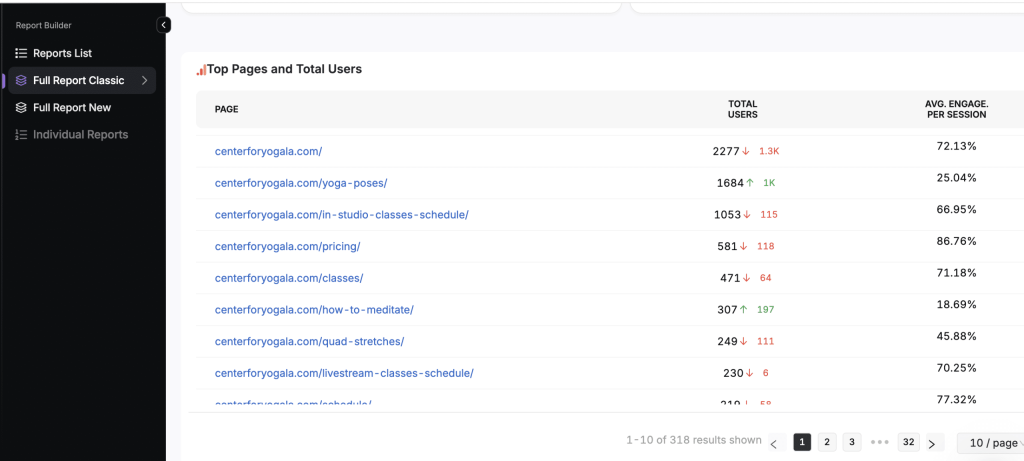
A few structural mistakes show up again and again.
The first is duplication without purpose. A company creates multiple pages that target near identical intent, often because teams are publishing by campaign rather than by architecture. That can split relevance and confuse both users and search engines.
The second is relying on sitemaps as a substitute for real structure. Google explains that sitemaps help it crawl a site more intelligently, but it also notes that smaller sites with pages reachable by following links from the home page may not need a sitemap at all. In other words, sitemaps are useful, but they do not replace good internal linking.
The third is ignoring breadcrumbs. Google’s breadcrumb documentation explains that breadcrumbs show a page’s position in the site hierarchy and can help users understand and explore a site more effectively. They are a small feature with outsized value because they reinforce hierarchy visually and structurally.
Conversion Architecture: Turning Traffic Into Revenue
What Conversion Architecture Really Means
Conversion architecture is the structure that turns discovery into action. It is the intentional arrangement of pages, next steps, proof, and pathways that help a visitor move toward the right decision. That might be a contact form, a quote request, a booked consultation, a product purchase, or a sales conversation.
Many brands treat conversion as a page level problem. They focus on button color, headline language, or form length. Those things matter, but they sit lower in the hierarchy. Conversion architecture asks a bigger question: did the visitor land in a system that helps them move forward logically?
When the answer is no, performance suffers even if individual pages look good. A visitor reads an article but cannot find the service behind it. A prospect lands on a service page but sees no related proof. A high intent user reaches a pricing page without enough context to feel confident. The friction is structural.
Mapping the Buyer Journey Through Your Site
A strong website architecture matches page types to stages of intent.
At the awareness stage, visitors need education. These pages explain problems, answer questions, and build trust. At the consideration stage, visitors need differentiation. They compare approaches, review examples, and evaluate fit. At the decision stage, they need clarity, proof, and a low friction path to act.
Conversion architecture makes those transitions obvious. An educational article should point naturally to a relevant service or solution page. A solution page should connect to case studies, FAQs, testimonials, or process information. A decision page should remove doubt and make the next step clear.
This becomes even more important in localized search journeys. A real estate brand targeting homes near the Santa Barbara waterfront, for example, needs separate pathways for neighborhood pages, listing discovery, financing education, and inquiry forms. When all of that is compressed into one catch all page, both SEO relevance and conversion clarity decline.
Creating Clear Conversion Paths
Every important page on your site should answer one simple question: what is the next best action for the visitor who lands here?
That action will not always be the same. A top of funnel article may lead to a related service page, a downloadable framework, or a case study. A service page may lead to a consultation request. A case study may lead to a contact form or proposal page. The right answer depends on intent.
What matters is continuity. Each page should bridge to the next stage rather than forcing the user to start over. Good conversion architecture reduces the number of decisions a user has to make. It removes ambiguity, reinforces trust, and keeps the journey coherent.
Aligning SEO Traffic With Conversion Goals
One of the biggest missed opportunities in content marketing is traffic that arrives with curiosity but never gets routed toward business value. This usually happens when SEO content is treated as a publishing calendar rather than as part of a broader system.
The fix is architectural. Informational pages should live inside a topic map that connects them to the services, outcomes, and proof relevant to that topic. When that map exists, organic traffic becomes more than pageviews. It becomes qualified movement through the site.
That is the real overlap between site structure SEO and conversion architecture. One helps attract the right visitors. The other makes sure the site knows what to do with them once they arrive.
How SEO and Conversion Architecture Work Together

Why Traffic Without Structure Fails
A professional services firm in Los Angeles can publish helpful content, attract qualified organic traffic, and still underperform if the visitor journey breaks after the first click. This is where many companies misdiagnose the problem. They assume traffic quality is weak when the real issue is that the site never gives those visitors a strong path toward trust and action.
HubSpot’s guidance is useful here because it ties website structure directly to user experience, retention, and conversions. Search Engine Land makes a similar case by connecting architecture to usability, crawlability, and long term growth. Both perspectives point to the same conclusion: traffic and structure should never be planned separately.
Building a Unified Growth System
When SEO and conversion architecture work together, the site begins to behave like a growth system rather than a collection of pages.
Your topical pages attract discovery. Your service pages frame the solution. Your proof pages reduce uncertainty. Your contact and proposal pages make the next step clear. Internal links tie those layers together so a visitor can move through them naturally.
This also makes your site more scalable. Instead of asking where each new page should live after it is written, you decide that upfront. Each new resource has a role. Each new service page has supporting content. Each cluster contributes to visibility and revenue at the same time.
A Simple Example of Integrated Architecture
Imagine a company that offers web design, SEO, and CRO support. It publishes a pillar article on website architecture, then supports that pillar with articles on internal linking, service page SEO, content clusters, and conversion pathways. Each supporting article links back to the pillar and forward to the relevant service page. The service page connects to proof, process, and contact pages. The result is a system where education supports authority, authority supports trust, and trust supports action.
That is the kind of architecture that compounds. It does not rely on one page performing perfectly. It lets the entire site reinforce itself.
Website Architecture Framework for Scalable Growth
Step 1: Define Core Topics and Services
Start by identifying the pages that matter most to your business. These are usually your primary services, core product categories, or highest value solution areas. They should sit near the top of your hierarchy because they represent what the business most wants to be known for and what it most needs to sell.
Then define the themes that support those pages. If you sell SEO services, for example, supporting themes may include technical SEO, on page optimization, local SEO, internal linking, and content strategy. These themes become the basis for cluster content, proof content, and supporting navigational paths.
Step 2: Build Supporting Content Clusters
Once the core topics are defined, create clusters around them. HubSpot’s topic cluster model is useful because it forces discipline. You build a strong central page, then surround it with specific resources that answer related questions and link back into the hub.
This structure helps prevent random publishing. Each new page should strengthen a topic area, not drift away from it. Over time, your clusters build topical depth and give search engines more evidence that your site understands the subject comprehensively.
Step 3: Create Strategic Internal Linking Systems
Now connect the pages in ways that reflect intent.
Your navigation should prioritize core paths. Your in content links should reinforce topical relevance. Your service pages should link to supporting proof and education. Your supporting pages should route visitors toward meaningful next steps. Your breadcrumbs should clarify position in the hierarchy. Google’s documentation on crawlable links and breadcrumbs makes both of these signals important for users and search engines alike.
This is also where local architecture matters. For a business serving Downtown San Luis Obispo and nearby areas, it often makes sense to separate local service pages, area specific proof, and educational resources instead of sending every visitor into one generic service page. Clear structure helps local intent feel relevant rather than forced.
Step 4: Design Conversion Pathways
After the linking system is in place, design the conversion flow.
What should a visitor do after reading a top of funnel article? What proof should support a mid funnel service page? What details should appear before a user reaches a contact form? These questions determine whether the structure drives action or simply organizes information.
Strong conversion architecture usually includes service pages, case studies, process pages, FAQs, and contact paths that align with buyer readiness. The key is sequencing. The site should meet people where they are, then guide them forward with context.
Step 5: Audit, Measure, and Scale
Architecture is not a one time exercise. It should be audited as the site grows. Google Search Console is designed to help site owners review search performance, inspect indexing, and understand how Google sees their pages. That makes it useful for spotting pages that are underlinked, underperforming, or disconnected from the rest of the system.
As you scale, ask whether new pages strengthen the hierarchy or dilute it. Ask whether important pages are still easy to reach. Ask whether your highest traffic content routes users toward meaningful business outcomes. If the answer is unclear, the architecture likely needs refinement.
Website Architecture Examples and Models
Simple Brochure Site Structure
A brochure style site is common for small local businesses and newer brands. It usually includes a home page, service pages, an about page, a contact page, and a light blog or resources section. This model works when the offering is simple and the page count is limited.
The risk appears when the business grows but the architecture does not. Extra pages get added without hierarchy, and the site begins to feel flat. If that happens, categories, supporting hubs, and clearer service groupings become necessary.
SEO Driven Content Website
A content driven site depends on topical authority. Here, the architecture needs strong category pages, pillar pages, cluster articles, and deliberate internal linking. Publishing volume alone is not enough. The structure has to tell search engines and users how the content fits together.
This model works well for SaaS brands, publishers, and businesses investing heavily in content marketing. It is also where site structure SEO has the most visible long term impact.
Conversion Focused Service Website
A conversion focused service site puts more weight on service pages, trust assets, and next steps. Educational content still matters, but it should clearly support commercial intent. The structure usually emphasizes services, process, industries, proof, and contact paths.
For high ticket services, this model often performs best when content and conversion assets are tightly linked. Visitors need information, but they also need reassurance.
Hybrid Model for Growth Focused Businesses
Most established businesses need a hybrid structure. They need the authority building power of content and the revenue focus of strong service architecture. That means combining pillar content, cluster content, service hubs, case studies, FAQs, and clear inquiry pathways into one coherent system.
For many B2B and high ticket brands, this is the most effective model because it supports both long term visibility and immediate lead generation.
Where We Work
ZatroX Studio provides website architecture services in San Luis Obispo and supports brands that need websites built for visibility, clarity, and growth. On its official site, ZatroX describes its expertise across website design and development, SEO, UX and UI design, hosting, and broader digital marketing services, all aligned around helping businesses grow online.
That positioning matters because architecture should never be treated as a narrow technical fix. For companies investing in web design, SEO, paid media, and content, the real opportunity is building a site that allows those efforts to reinforce one another.
Common Website Architecture Mistakes to Avoid
The first mistake is overcomplication. Not every page needs its own silo, and not every idea deserves a primary navigation slot. Complexity can feel strategic, but it usually creates friction.
The second mistake is weak internal linking. Google explicitly says links help it crawl pages and understand relevance. If valuable pages are buried, unloved, or disconnected, performance suffers.
The third mistake is building around departments instead of users. A site may reflect the company’s internal org chart perfectly while still making no sense to a prospect. Architecture should follow user questions, user intent, and business priorities.
The fourth mistake is separating SEO from conversion strategy. A page that ranks but does not connect to any meaningful next step is incomplete. A service page built to convert but unsupported by surrounding content is fragile. The strongest sites solve both problems together.
How to Evaluate Your Current Website Architecture
Start with a few practical questions.
Can a new visitor understand your main services within seconds?
Can they move from an educational page to a commercial page naturally?
Do your supporting articles reinforce your core topics?
Are your most important pages easy to reach from high authority pages?
Do your URLs, breadcrumbs, and categories reflect a clear hierarchy?
Are there pages that exist but rarely receive internal links?
Then review the site with data. Search Console can help you inspect index coverage, page performance, and how Google sees individual URLs. That gives you a clearer picture of whether pages are discoverable and whether your architecture is supporting the right content.
You should also look for behavioral signs. If users enter through blogs but rarely reach service pages, the bridge is probably weak. If important pages get little internal traffic, they may be buried. If multiple pages target the same topic with no clear hierarchy, the structure may be splitting relevance.
Start Building a Website That Actually Performs
A stronger website architecture will not solve every growth problem overnight, but it changes the foundation everything else sits on. Better content performs more predictably. Service pages gain more support. Paid traffic lands in a clearer journey. Local pages become more relevant. Conversion opportunities stop feeling disconnected.
For ZatroX Studio, this is where branding and performance meet. The company positions itself around website design, SEO, UX and UI, and digital growth, which makes architecture a natural part of the value it brings to clients. A website should not only look polished. It should guide users, support discoverability, and create a stronger path to revenue.
Improve Your Website Architecture With ZatroX Studio
Website architecture is the system behind your site’s performance. It determines how pages connect, how search engines interpret relevance, and how users move toward action. When that system is weak, content struggles, rankings stall, and conversions feel harder than they should. When it is strong, the entire site becomes easier to crawl, easier to navigate, and easier to trust.
That is why site structure SEO and conversion architecture should be planned together. One builds visibility. The other turns visibility into momentum. For brands that want sustainable growth, website architecture is not a background detail. It is one of the clearest strategic levers on the site.
Ready to get started? Request a proposal today and see how we can help!