Custom Web Design That Converts
Growth-minded brands need custom infrastructure and integrated analytics rather than off-the-shelf templates to scale demand
By ZatroX Studio, LLC Editorial Team · Updated 2026-08-14
Custom web design for conversions replaces generic templates with data-driven architecture built around user behavior, page speed, and clear calls to action. ZatroX Studio offers media production and digital marketing services, aligning full-stack development, CRO audits, and analytics tracking to turn website traffic into measurable revenue for growth-focused brands.
Key Takeaways
Custom web design blends data-driven strategies with innovative design to increase conversions and drive measurable business results.
ZatroX Studio delivers conversion-focused websites by creating seamless user experiences that guide visitors toward specific actions.
User-centric design prioritizes conversion optimization, transforming websites from digital brochures into high-stakes business assets generating growth.
ZatroX Studio's 25+ years of expertise and 500+ completed projects demonstrate proven success in conversion-optimized web design.
Why Do Generic Templates Cap Your Growth?
Template-based websites cap growth because they lack the infrastructure to scale demand generation. Off-the-shelf themes offer fixed layouts, shallow analytics, and rigid navigation that can't flex as a company's marketing strategy matures. Growth-minded brands need integrated data systems. True custom web design, built to support real demand generation rather than a one-size-fits-all shell.
A website today functions as a revenue engine, not a static brochure. Visitors expect a fast, guided path from first click to conversion, and templates rarely deliver that path with precision.
Why does navigation structure matter so much for conversions?
Confusing menus actively push buyers away. Research shows that a confusing navigation menu can send as much as 88% of visitors straight to competitors, a loss most businesses never see reflected in their traffic reports. Clear, conversion-focused web design solves this by mapping navigation to actual buyer intent instead of internal org charts.
Does page speed really affect revenue?
Yes — a single second of load delay can cost a business roughly 7% of its conversions. That's real pipeline lost to a slow theme, oversized images, or bloated plugins common in template builds.
Scaling past these limits requires genuine development capability, not just a design refresh. Key gaps templates create include:
No custom architecture suited to complex product or service catalogs
Limited responsive web design performance across device types
Weak integration between the site and marketing analytics stacks
No in-house engineering to fix speed or navigation issues quickly
Closing these gaps demands real WordPress engineering, brand identity work, and hosting support. Capabilities most template platforms simply don't include. Businesses ready to scale need infrastructure built for growth, not borrowed from a generic library.

What Makes Web Design Truly Conversion-Focused?
Data separates conversion-focused web design from decoration. User behavior and proven design principles drive every placement, color, and layout choice. Not internal preference or a marketing team's gut feeling. Guesswork costs businesses paying customers; measurable evidence recovers them.
Optimized design works as the foundation of a high-performing digital strategy, not an afterthought bolted onto a finished site. Brands that treat their website as core infrastructure see stronger engagement. Steadier lead flow than those relying on generic, one-size-fits-all templates. Custom web design built around this principle gives growth-minded companies a structural advantage competitors using stock themes simply cannot match.
Does site speed and security actually affect conversion rates?
Yes. Slow, unstable sites erode trust before a visitor ever reads the offer. Projects engineered for speed and security, supported by cloud infrastructure and Cloudflare protection, keep pages fast and resilient under real traffic loads. That reliability translates directly into more completed forms, calls, and purchases.
Conversion-focused web design succeeds through a specific combination of capabilities:
Behavioral data guiding layout and content decisions, rather than assumptions
Responsive web design ensuring consistent performance across desktop, tablet, and mobile screens
Secure, cloud-based hosting infrastructure that protects uptime and page speed
An in-house, full-stack development team executing custom builds end to end
A data-led strategy connecting design choices to measurable business outcomes
Why does experience matter for custom builds?
Volume signals capability. A portfolio spanning more than 500 delivered projects reflects patterns tested across industries, audiences, and goals. Not a single template applied repeatedly. That depth of experience shapes design decisions long before a single wireframe gets drawn.
Businesses evaluating a redesign should ask one question first: does the current site rest on evidence, or on opinion? Conversion-focused design answers that question with data, engineering discipline, and a build process accountable to results.
How Does Responsive Design Protect Every Visitor?
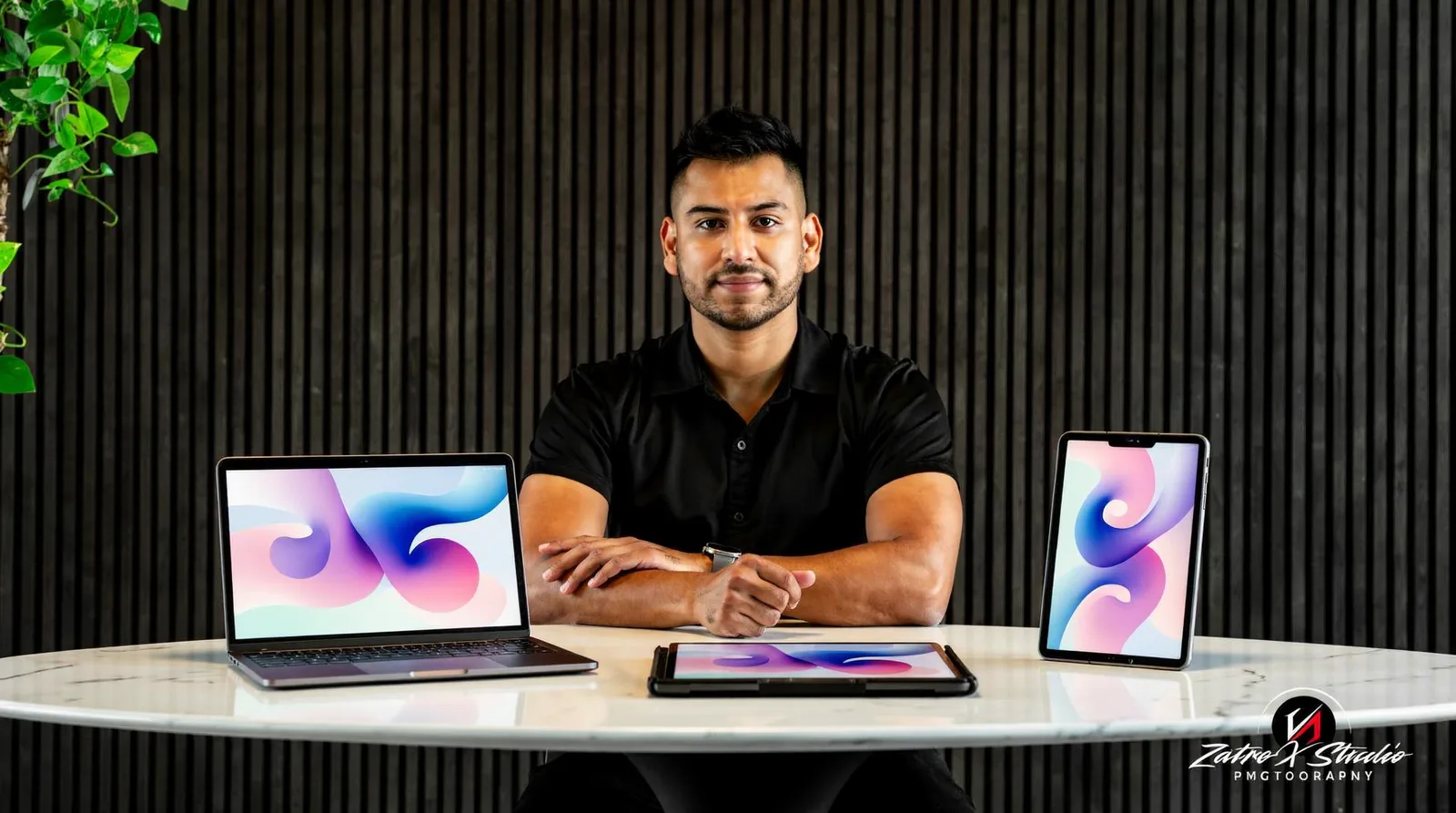
Responsive layouts shield every guest — desktop, tablet, or phone. From broken menus, tiny buttons, and slow load times that kill trust in seconds. A visitor who hits a clunky mobile site rarely gives a second chance. Losing that visitor means losing the lead, the sale, and often the referral that would have followed.
Responsive web design does more than resize a page; it preserves the entire path a buyer takes toward a decision. Optimized user experience, content hierarchy, and information architecture keep visitors moving through high-value journeys no matter which screen they hold. Paired with CRM and marketing-automation integrations, every lead still routes, scores, and attributes correctly, so no prospect falls through the cracks between devices.
Consistency matters as much as speed. Scalable design systems and visual storytelling keep a brand's identity sharp and distinct across every breakpoint, from a widescreen monitor to a five-inch phone. A logo, color palette, or headline that looks polished on desktop but pixelated on mobile undermines credibility instantly.
Why does device consistency matter for conversions?
Buyers judge legitimacy within moments of landing on a page. Website design, development, and visual identity work have to function as one system, not separate projects bolted together, so navigation and branding stay coherent across breakpoints. A disjointed experience signals a disjointed business.
Does agency experience actually change usability outcomes?
Yes. More than twenty-five years of combined agency expertise shapes the layout. Usability decisions behind responsive builds, from touch-target sizing to load-order priorities. That depth of practice reduces guesswork and replaces it with tested patterns proven to hold up across screen sizes.
Growth-focused organizations weighing a custom-web-design investment should treat responsiveness as a baseline requirement, not an upgrade. Every visitor deserves the same functional, on-brand experience, regardless of the device in hand.
What Does a Custom Build Process Look Like?
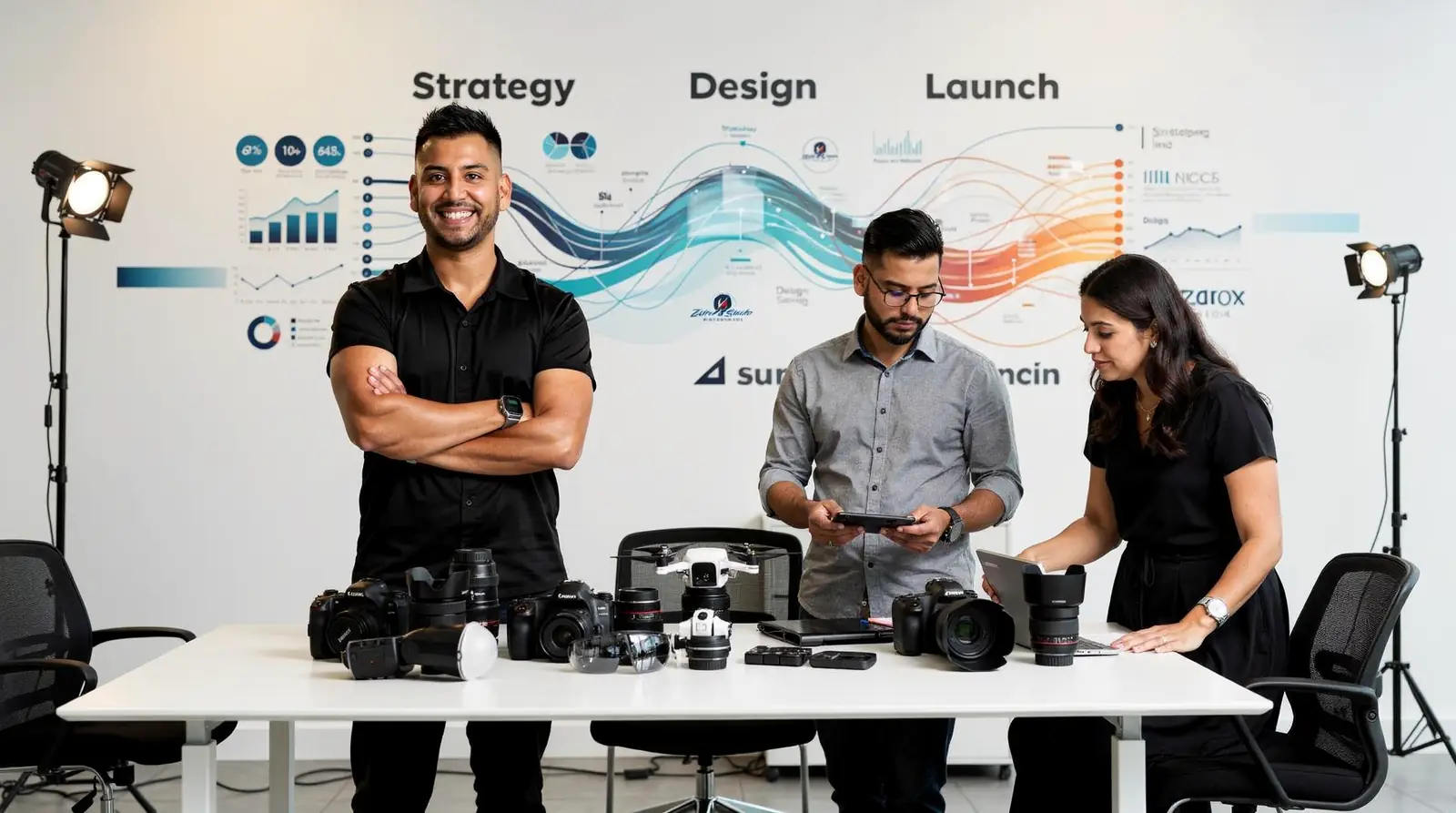
A structured engagement follows four stages: discovery and strategy, design and build, launch, and ongoing optimization. Skipping any stage risks a site that looks polished but fails to convert visitors into paying customers. Businesses moving away from generic templates need a process built around measurable outcomes, not guesswork.
Discovery comes first. Strategists study the business goals, target audience, and competitive landscape before a single wireframe gets drawn. This groundwork shapes every decision that follows, from navigation structure to calls to action.
How does the discovery phase reduce risk?
Prospective clients can request a proposal and run a free site audit before committing to a build. That audit exposes weak spots in an existing site's performance, structure, or messaging. Reviewing findings upfront means leadership teams commit budget only after seeing where the current site falls short.
Why hire professionals instead of building in-house?
Design professionals remove the heavy lifting that overwhelms internal marketing teams. Their involvement helps brands implement a build engineered for results rather than guesswork, translating strategy into a working system faster than a self-managed project typically allows.
The build phase itself blends structure with craft. A custom web design approach avoids the constraints of off-the-shelf themes, giving CMOs full control over layout, functionality, and brand expression. Every element gets built with conversion-focused web design principles in mind. Clear pathways, tested calls to action, and content that guides visitors toward a decision.
Mobile performance factors into every stage, too. Responsive web design ensures layouts adapt cleanly across phones, tablets, and desktops without sacrificing speed or clarity.
What started as a boutique web design studio has grown into a full-service agency trusted across California markets, a trajectory built on this same disciplined, stage-by-stage process. Launch marks a milestone, not a finish line; optimization continues as data reveals new opportunities.
Why Does Site Speed Determine Conversion Rates?
Milliseconds decide revenue. A single extra second of load delay drains 7% of a site's conversions, turning eager buyers into bounced traffic before a page ever finishes rendering. For growth-focused leaders comparing generic templates to purpose-built platforms, that statistic changes the entire calculus of web investment.
Custom-built sites close this gap through engineering, not guesswork. Custom web design projects get built for speed, security, and conversion from the ground up, leveraging cloud infrastructure through Google's platform paired with Cloudflare protection. That combination shortens load times, hardens sites against downtime, and keeps every visitor session running smoothly under real-world traffic.
What Infrastructure Actually Powers Faster Load Times?
Hosting architecture matters as much as design choices. Sites built on Google Cloud, routed through the Google Premium Tier Network, and shielded by Cloudflare's content delivery network deliver pages faster and more reliably than shared, budget hosting environments. This infrastructure scales automatically during traffic spikes, protecting conversion rates during peak demand instead of buckling under it.
Does Experience Building Sites Actually Improve Speed Outcomes?
Track record signals technical maturity. A portfolio spanning more than 500 completed projects demonstrates a proven ability to architect sites that perform reliably at scale, not just look polished in a demo.
Three factors separate high-performing infrastructure from templated alternatives:
Server-level engineering — cloud hosting tuned for speed rather than default configurations
Security layering — Cloudflare protection reducing downtime risk and load interruptions
Proven delivery history — hundreds of completed builds validating consistent performance
Business leaders evaluating conversion-focused web design should treat speed as infrastructure strategy, not a cosmetic afterthought. Slow sites lose customers silently; fast, properly hosted platforms convert the traffic already arriving at the door.
How Does Infrastructure Support Scalable Growth?
Scalable infrastructure turns a website from a static brochure into a growth engine that expands alongside revenue. As a digital marketing and media production agency, ZatroX Studio builds systems designed to scale with each client's trajectory, not just launch and stall out. Businesses that outgrow rigid, template-based platforms often lose leads at exactly the moment demand spikes. The infrastructure buckles when it matters most.
Custom-web-design solves this problem by building architecture around future needs, not just current ones. A site engineered for growth accommodates new service lines, additional locations, and rising traffic without a costly rebuild. That flexibility matters most for companies already scaling fast.
Who Is This Infrastructure Built For?
The build model fits local and high-growth brands, including companies with pricing varies or more in annual revenue and marketing budgets starting at pricing varies. Businesses across San Luis Obispo, Paso Robles, Santa Maria, Morro Bay, Atascadero, Santa Barbara, Los Angeles, and Miami rely on this same scalable approach. Geography varies; the underlying architecture doesn't.
What Keeps Leads From Falling Through the Cracks at Scale?
Growth strains disconnected systems fast. A conversion-focused-web-design approach pairs strong information architecture with CRM, MAP, and RevOps integrations, so every lead routes, scores, and attributes correctly as volume climbs. Without that connective tissue, marketing spend generates activity without accountability.
Three infrastructure priorities separate scalable systems from brittle ones:
Responsive-web-design that performs consistently across devices as traffic sources diversify
Integration-ready architecture that connects CRM, marketing automation, and revenue reporting
Information hierarchies built to absorb new pages, markets, and offers without a full rebuild
Marketing leaders evaluating a platform overhaul should ask one question first: will this system still work at triple the traffic? Infrastructure built for scale answers yes by design, not by accident.
Which Industries Benefit Most From Custom Design?
Health and wellness brands, technology firms, electrical contractors, security companies, and roofing and construction businesses gain the most from a tailored web build. Generic templates rarely handle the licensing details, service-area maps, or trust signals these industries need to win a bid or book an appointment. Custom platforms, by contrast, adapt to each sector's sales cycle instead of forcing the business into a one-size-fits-all mold.
Portfolio experience across these six sectors reveals a common thread: buyers in regulated or high-stakes categories research longer before they commit. A custom web design gives contractors. Clinics room to answer objections directly on the page, rather than losing prospects to a slow, generic checkout flow.
Why does custom design matter more for franchise and enterprise brands?
Franchise and enterprise organizations need SEO infrastructure that scales across dozens of locations without diluting rankings. An SEO practice built around local, technical, and AI-driven search supports these larger custom builds, ensuring each location page competes on its own merit while feeding a comprehensive audit process. That level of technical coordination rarely survives a stock template.
Does industry type change what "conversion-focused" means?
Yes — a security company's conversion goal (a quote request) looks nothing like a wellness brand's goal (a booked consultation). Conversion-focused web design treats each industry's buying trigger as the starting point for layout, copy, and calls to action.
Service-driven and B2C brands also benefit from in-house media production woven into the same project, giving roofing crews, electricians, and wellness studios visual storytelling assets instead of stock photography. Across every vertical, the underlying goal stays constant: responsive web design creates a seamless experience across devices that moves visitors toward action, whatever "action" means for that industry.
A quick look at how conversion goals and site priorities shift across the verticals this build model serves:
Industry | Primary Conversion Goal | Key Site Requirement |
|---|---|---|
Health & wellness | Booked consultation | Trust signals, easy scheduling |
Technology firms | Demo or trial request | Clear product architecture |
Electrical contractors | Service quote request | Service-area maps, licensing details |
Security companies | Quote request | Trust signals, licensing details |
Roofing & construction | Booked estimate | Service-area maps, visual portfolio |
How Do You Start a Custom Web Design Project?
A project starts with a simple, no-pressure inquiry. Growth-minded business owners can request a proposal, run a free site audit, or book a strategy meeting online. No lengthy paperwork required. That first step reveals whether an existing site is losing leads through slow load times, confusing navigation, or outdated design that fails to convert visitors into customers.
From there, every engagement follows a structured path. Discovery and strategy come first, establishing business goals, target audience, and conversion benchmarks before a single wireframe gets drawn. Only after that groundwork is laid does the process move into design and build, ensuring the finished product. Whether a custom web design or a responsive web design built for mobile-first traffic — actually serves measurable business outcomes rather than aesthetic preference alone.
What Happens During the Initial Consultation?
Initial conversations focus on business objectives, not just visual style. Marketing leaders walk through current pain points. Slow conversion rates, weak mobile performance, or a brand identity that no longer matches company growth. Scheduling flexibility matters here: office hours run Monday through Friday, 6:30 AM to 8:00 PM, giving busy executives room to fit strategy calls around demanding calendars.
Does Location Affect Project Delivery?
Headquarters in San Luis Obispo, California anchor the delivery process for Central Coast clients and statewide brands alike. Proximity isn't required for collaboration, since discovery, design, and build phases run on structured timelines regardless of a client's city. What matters more is the sequence: strategy first, design second, optimization ongoing.
A conversion-focused web design approach means launch day marks a beginning, not an end. Performance tracking and refinement continue well after the site goes live.
Custom web design for conversions represents far more than aesthetic refinement—it embodies a strategic commitment to transforming visitor intent into measurable business outcomes. By aligning design architecture, user experience, and conversion mechanics, brands unlock the full potential of their digital presence. ZatroX Studio's approach integrates analytics, engineering, and creative strategy to deliver websites engineered for performance. Whether you're scaling a local operation or expanding regionally, conversion-focused design remains the foundation upon which sustainable growth is built.
FAQ
Why does custom web design outperform template-based sites for conversions?
Custom web design uses data-driven architecture built around user behavior, page speed, and clear calls to action. Templates offer fixed layouts and shallow analytics that cap growth and conversions.
How does page load speed impact conversion rates?
A single second of load delay costs a business roughly 7% of its conversions, making speed optimization a core part of conversion-focused web design instead of an afterthought.
What experience does ZatroX Studio bring to conversion-optimized web design?
ZatroX Studio combines 25+ years of expertise with over 500 completed projects, aligning full-stack development, CRO audits, and analytics tracking to turn traffic into measurable revenue.
Facts
ZatroX Studio, LLC is located in San Luis Obispo, California, US.
ZatroX Studio is a digital marketing and media production agency.
ZatroX Studio is headquartered in San Luis Obispo, California.
ZatroX Studio has delivered over 500 projects.
ZatroX Studio has 25+ years of expertise.
ZatroX Studio offers media production services.
ZatroX Studio's office hours are Monday to Friday, 6:30 AM to 8:00 PM.